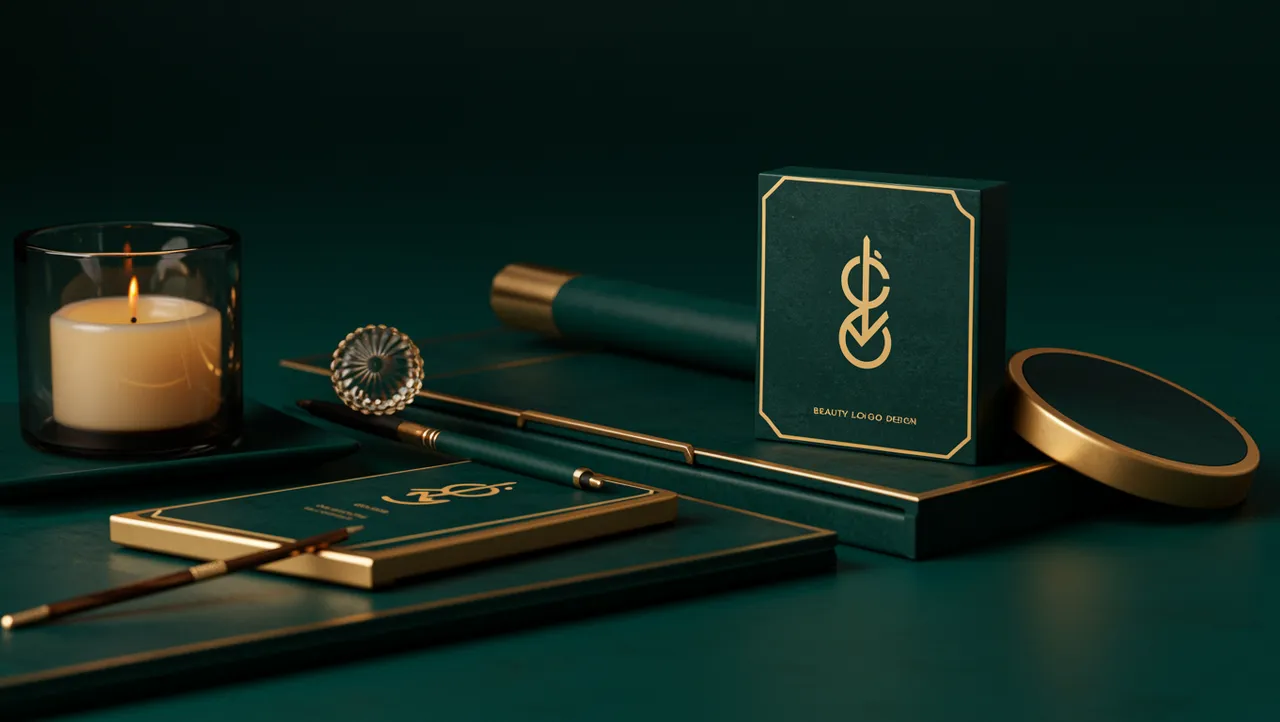
industry applicationsbeauty
Beauty Logo Design That Captivates at First Glance
Discover stunning beauty logo design ideas that captivate customers instantly. Learn proven strategi...

Learn how ecommerce logo design impacts customer trust and boosts online sales. Discover proven strategies to create logos that convert visitors into buyers.
Learn how ecommerce logo design impacts customer trust and boosts online sales. Discover proven strategies to create logos that convert visitors into buyers.
A friend of mine launched a pet accessories store on Shopify last year. Beautiful products, competitive pricing, fast shipping. But her conversion rate hovered around 0.8% for months. The fix that finally moved the needle wasn't a new ad campaign or a pricing tweak. It was a logo redesign. Her original mark looked fine on a mood board, yet it crumbled at 32 pixels on a mobile browser tab. Ecommerce logo design operates under constraints that physical retail never faces, and ignoring those constraints costs real revenue.
Your logo on a digital storefront does more heavy lifting than a sign above a brick-and-mortar door. It appears on favicons, app icons, email headers, social thumbnails, retargeting ads, and package inserts. Each context demands a different size, sometimes a different orientation. A mark that works at 400 pixels wide might dissolve into an unreadable blob at 16 pixels.
Research on visual processing speed shows that users form aesthetic judgments about a website in roughly 50 milliseconds Lindgaard et al., 2006. Your logo is central to that snap judgment. If it looks amateurish, cluttered, or blurry at any of those touchpoints, trust evaporates before a shopper even scrolls.
Think about it this way: physical stores have architecture, lighting, and staff to build credibility. Online stores have pixels. Your logo is often the single strongest trust signal above the fold.
This is why scalability matters more than cleverness. A beautifully intricate crest might look stunning on a business card, but ecommerce demands simplicity that survives brutal compression. Design for the smallest use case first, then scale up. If your mark reads clearly as a favicon, it will work everywhere else.
Shoppers abandon carts for dozens of reasons, but perceived legitimacy is near the top of the list. A Baymard Institute study found that 19% of users who abandoned checkout cited a lack of trust in the site with their credit card information Baymard Institute, 2024. Your logo is the first visual handshake that either builds or breaks that trust.
Consider the pet industry. Pet brand logo design often leans heavily on playful illustrations, paw prints, and bright colors. That warmth is important for connecting emotionally with animal lovers. But playfulness without professionalism signals "hobby project," not "reliable business." The best pet ecommerce brands, like BarkBox and Chewy, balance approachable personality with clean, confident typography.
The same tension exists in beauty brand identity. Glossier's minimal wordmark communicates premium simplicity. A new cosmetics branding startup using a generic script font from a free logo generator sends the opposite message, even if the products are comparable.
What should you do with this? Run a quick gut check. Show your logo to five people who've never seen your brand and ask one question: "Would you enter your credit card on a site with this logo?" If even one person hesitates, you have a trust problem worth fixing. A logo analysis can quantify exactly where that hesitation comes from.
Color isn't decoration in ecommerce. It's a conversion lever. The psychology of color directly influences purchase intent, and the right palette depends heavily on your product category.
Here's what the research suggests:
But here's the catch: these are starting points, not formulas. A pet brand selling luxury organic dog food might benefit more from muted earth tones than the bright primary colors typical in animal logo design. Context overrides convention every time.
One thing designers overlook: your logo color needs to maintain contrast against both light and dark backgrounds. Many ecommerce platforms let merchants customize storefront themes, and your logo will appear on product pages, checkout screens, and transactional emails with varying backgrounds. Test relentlessly.
Mobile commerce accounted for roughly 60% of global ecommerce sales in 2024 Statista, 2024. If your logo wasn't designed with a phone screen as the primary canvas, you're optimizing for the minority of your customers.
Mobile-first ecommerce logo design means three things:
I've seen this mistake countless times: a founder falls in love with a detailed illustrative logo, then watches it turn into a colored smudge on Instagram stories. The solution isn't to abandon illustration entirely. It's to build a flexible identity system with a primary mark and a simplified secondary mark.
Quick reality check: pull up your store on your phone right now. Squint slightly. Can you identify every element of your logo? If not, your mobile customers can't either, and they're making purchase decisions in that state of partial attention.
Category-specific conventions exist for good reason. They create instant recognition of what kind of store a shopper has landed on. But the brands that win are the ones that honor the convention just enough to signal category, then break it just enough to stand out.
In pet industry branding, the clichés are thick: paw prints, hearts, cartoon animals. These elements aren't inherently bad. Chewy uses a simple, friendly wordmark without any of those tropes, and it reads as unmistakably pet-focused through color warmth and brand voice alone. If you do use an animal illustration, make it distinctive. A custom-drawn dog silhouette beats a stock paw print every time.
For beauty and cosmetics, minimalism currently dominates. Brands like Drunk Elephant and The Ordinary built massive followings partly through stripped-down visual identities that signal transparency and ingredient focus. But the pendulum is swinging. Maximalist, vintage-inspired beauty brands like Bonne Brise are carving out space by rejecting the minimal trend entirely.
So what does this mean for your brand? Study your direct competitors. If every animal logo design in your niche uses the same teal-and-white palette with a sans-serif font, going serif with a warm terracotta could be the differentiation your brand needs. Our case studies show how small identity shifts create measurable conversion differences.
Designing a logo based on instinct alone is a gamble. The smarter approach is to test before you commit, especially when your logo directly touches revenue.
A/B testing logo variations on your homepage header is one option, though it requires meaningful traffic volume to reach statistical significance. A faster path: use neuroscience-backed analysis to evaluate how your logo performs on attention, trust, and memorability metrics before it goes live.
Worth noting: the testing shouldn't stop at the logo in isolation. Place your logo in context. Mock it up on your actual product page, in a Google Shopping ad, on a shipping box, and inside a post-purchase email. A logo that tests well in a vacuum can still fail in the ecosystem where customers actually encounter it.
Eye-tracking research consistently shows that users follow predictable scan patterns on ecommerce pages. Your logo needs to anchor the top-left or top-center without competing with your primary call to action. If the logo draws too much visual attention away from "Add to Cart," it's working against you, no matter how beautiful it is.
Not necessarily. Amazon's logo doesn't show products. Chewy's doesn't show a pet. What matters more is that your logo communicates the right emotional tone for your category. Typography, color, and style do that work without literal product imagery.
Most successful ecommerce brands refresh every 5 to 7 years, with minor refinements more frequently. If your conversion rates are declining or your brand feels dated compared to competitors, those are signs your logo needs a refresh.
You can, but you should have responsive versions. A detailed version works on packaging where print resolution is high. A simplified version should exist for digital contexts where space and resolution are limited.
No. Some of the strongest pet brands use wordmarks or abstract shapes instead. Including an animal can help with instant category recognition, but a generic animal illustration can also make your brand forgettable. Originality matters more than literal representation.
Your ecommerce logo design is working for or against your conversion rate right now. If you're not sure which, find out. Analyze your logo with Logo Analyzer to get a neuroscience-backed assessment of how your mark performs on trust, clarity, and memorability, the three metrics that matter most when a shopper is deciding whether to buy.
Discover stunning beauty logo design ideas that captivate customers instantly. Learn proven strategi...
Discover how AI analysis transforms travel logo design into stunning visual identities. Learn expert...
Learn how construction logo design builds client trust and establishes your brand. Discover proven s...
Get a free scientific analysis with 550+ metrics across perception and design.
Try Free Analysis