
industry applicationsbrand
Car Brand Logo Analysis to Sharpen Market Identity
Discover how car brand logo design shapes market identity and consumer perception. Learn strategic i...
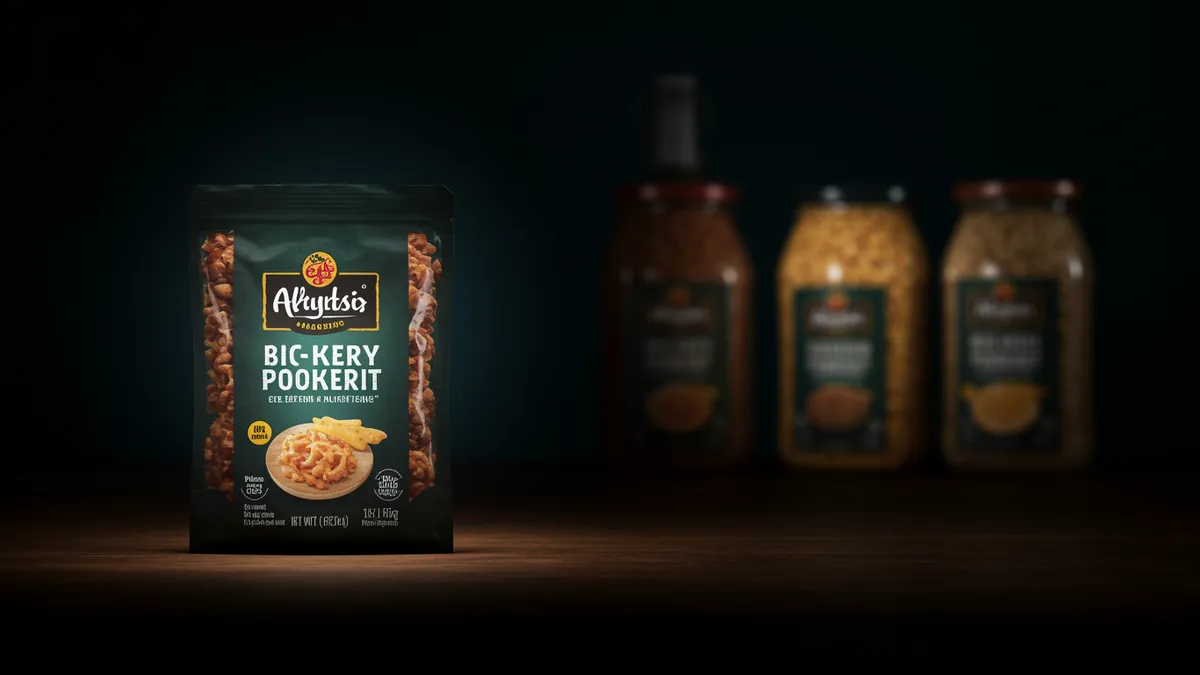
Learn how strategic food brand logo design captures consumer attention and boosts shelf appeal. Discover proven design principles that increase sales today.
Learn how strategic food brand logo design captures consumer attention and boosts shelf appeal. Discover proven design principles that increase sales today.
A grocery store shelf holds roughly 30,000 products. Your food brand logo has about 300 milliseconds to earn a second glance. I once worked with an organic snack company whose packaging looked beautiful in Figma but vanished completely between competitors at eye level. The fix wasn't a full rebrand. It was surgical: color adjustment, typography weight, and a symbol that popped at arm's length. That experience taught me something designers often forget: a food logo doesn't live on a screen. It lives on a shelf, fighting for survival.
Your logo is the single fastest signal a shopper processes before any other packaging element registers. Research on visual attention in retail environments shows that consumers fixate on brand identifiers before reading product descriptions, nutritional claims, or even price tags Clement, 2007. The logo anchors everything.
Think about it this way: packaging design is the house, but the logo is the front door. If the door doesn't invite someone in, the interior doesn't matter. This is especially true in crowded categories like snacks, beverages, and frozen foods where dozens of brands sit side by side.
What makes a food brand logo work at shelf level? Three things consistently separate winners from wallpaper:
One thing designers overlook: shelf position changes everything. A logo optimized for eye-level viewing may lose legibility on a bottom shelf where shoppers look down at a steep angle. If you want to see how eye tracking reveals these viewing patterns, the data is genuinely surprising.
Color is the most emotionally loaded element of any food logo. Red and yellow dominate fast food branding not because of tradition, but because warm hues stimulate appetite responses in the brain. Research in the journal Appetite found that warm-colored food packaging increased purchase intent by up to 20% compared to cool-colored alternatives Huang & Lu, 2016.
But here's the catch: not every food brand should reach for red.
Premium organic brands have successfully claimed green and earth tones. Plant-based companies own deep greens and clean whites. Artisan and craft brands lean into muted, desaturated palettes that whisper "handmade." The color has to match the brand's positioning, not just the category convention.
Consider this: the psychology of color shifts dramatically across food subcategories. A bright yellow that works for a chip brand would feel completely wrong on a cold-pressed juice. Context determines whether a color attracts or repels.
Worth noting: what works in food branding often fails spectacularly in adjacent industries. A beauty brand identity built on appetite-stimulating reds reads as aggressive rather than luxurious. And cosmetics branding typically gravitates toward pastels, metallics, and monochromatic schemes that would make a food product look clinical. The rules change with the category.
The typeface in your food logo communicates flavor, quality, and price point before a single word is consciously read. Rounded, soft typefaces activate associations with sweetness Velasco et al., 2014. Angular, condensed fonts suggest bold or spicy flavors. Serif fonts in food branding almost always signal premium positioning or heritage.
I've seen brands spend months perfecting a wordmark only to set it in a typeface that contradicts their product. A kids' cereal brand using a thin, elegant serif. A craft brewery using a generic geometric sans. These mismatches create cognitive friction that shoppers feel but can't articulate.
Here's what works across food subcategories:
Your typography also needs to survive the packaging production process. Thin hairline strokes that look elegant on screen can disappear entirely on a matte-finish pouch or a shrink-wrapped bottle. Always test your food brand logo at actual production size, on actual materials. A logo analysis can flag legibility issues before you commit to a print run.
This might seem like an unexpected comparison, but pet industry branding and food branding share a fascinating overlap: both sell consumable products where trust is non-negotiable. Pet owners scrutinize ingredients and brand credibility the same way parents evaluate kids' food.
Animal logo design in the pet space tends to prioritize warmth, approachability, and emotional connection. Brands like Blue Buffalo and Merrick use illustrative, detailed imagery that signals care and quality. Pet brand logo design almost never goes minimal or abstract because the buyer needs to feel an emotional bond with the brand before trusting it with their animal's health.
So what does this mean for your food brand? If your product sits in a trust-sensitive category (baby food, allergen-free products, organic lines), borrowing from pet branding principles can be surprisingly effective. Illustrative elements, visible craftsmanship in the logo, and warm color palettes all build the kind of trust that minimalist tech-inspired logos simply cannot.
The data tells a different story for commodity food products, though. Generic pantry staples benefit more from clean, bold, no-nonsense marks that prioritize speed of recognition over emotional warmth. Know which game you're playing before you design.
Most food brands test their packaging but never isolate the logo as a variable. That's a mistake. Your logo needs to perform independently of the packaging context because it will appear on social media, delivery apps, loyalty programs, and co-branded promotions where the full package design isn't visible.
Here's a simple framework for testing:
A neuroscience-backed analysis can quantify these factors with more precision than gut feeling allows. Attention mapping, emotional response scoring, and memorability metrics give you data points that informal testing misses.
Quick reality check: even major food brands get this wrong. Tropicana's infamous 2009 packaging redesign removed key brand identifiers and cost the company an estimated $50 million in lost sales within two months. Testing isn't optional. It's insurance.
A food brand logo must flex across an entire product family without breaking. This is where many emerging brands struggle. They design a logo that works beautifully for their hero product, then watch it fall apart when they expand into new SKUs, flavors, or categories.
The solution is designing a logo system, not just a logo. That means defining:
Brands like KIND and Clif Bar do this exceptionally well. Their logos remain rock-solid anchors while packaging varies dramatically across product lines. The logo is the constant; everything else can shift.
If you're managing multiple product lines and wondering whether your visual identity holds together, running a logo comparison across your SKUs can reveal inconsistencies you've gone blind to. Sometimes the brand manager who sees the logo every day is the last person to notice it's drifting.
Food logos must trigger sensory and appetite associations that other industries don't require. Color warmth, organic shapes, and typography that suggests flavor profiles all play a role. The logo also needs to perform at very small sizes on physical packaging, which demands higher contrast and simpler forms than purely digital logos.
It depends on your positioning. Premium, artisan, and trust-sensitive food brands benefit from illustrative elements that convey craftsmanship. Mass-market and commodity brands usually perform better with bold, typographic logos that prioritize instant recognition at shelf speed.
Most successful food brands refresh (not redesign) every 7 to 10 years. Subtle updates keep the brand current without sacrificing the recognition equity you've built. If you're unsure whether it's time to refresh your logo, look for declining shelf performance or consumer confusion as early signals.
Absolutely. Online food brands still compete visually, just in thumbnail grids instead of physical shelves. Your logo needs to be instantly recognizable at 40x40 pixels on a delivery app. In some ways, digital shelf appeal is even more demanding because you can't rely on physical packaging shape or texture to differentiate.
Your food brand logo is working for or against you every second it sits on a shelf, a screen, or a delivery app. If you're not sure which one it is, analyze your logo with our neuroscience-backed platform and get objective data on how your mark performs where it matters most.
Discover how car brand logo design shapes market identity and consumer perception. Learn strategic i...

Wellness brand logo design builds trust and credibility with your audience. Discover proven strategi...
Discover how property brand logo design builds client trust and sets your real estate business apart...
Get a free scientific analysis with 550+ metrics across perception and design.
Try Free Analysis